
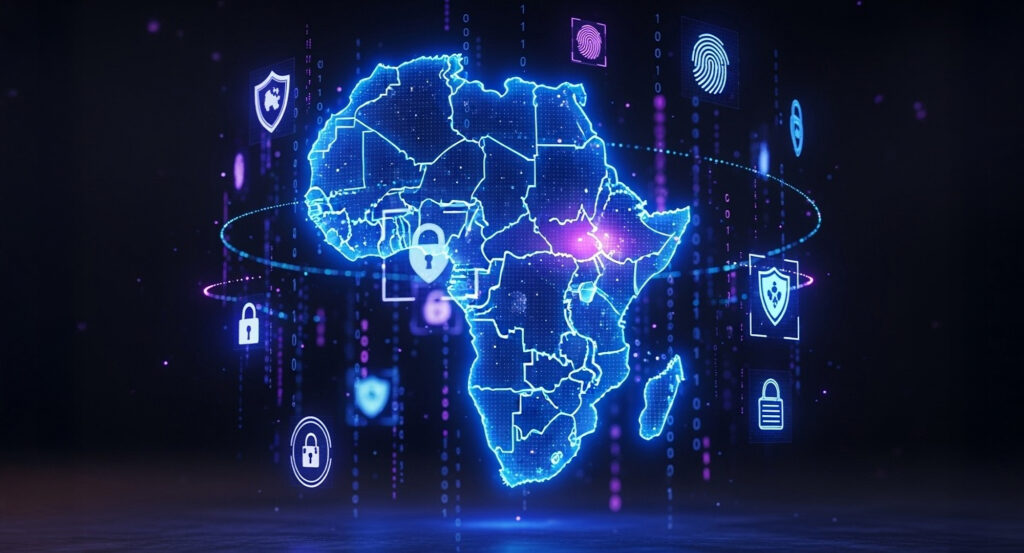
In an era where digital transformation is reshaping economies, Africa’s cybersecurity landscape stands at a critical juncture. Cybersecurity resilience which is the ability of systems, organizations, and societies to anticipate, withstand, and recover from cyber threats, has become essential for sustainable growth. However, the continent’s fragmented environment, characterized by diverse regulatory frameworks, varying technological adoption rates, and geopolitical influences, poses unique challenges. With over 1.4 billion people increasingly connected via mobile and internet services, Africa faces escalating cyber risks amid rapid digitization. This article explores these dynamics, highlighting threats, disparities, and pathways to building robust resilience.
Africa’s digital economy is booming, projected to contribute significantly to GDP by 2030 through fintech, e-commerce, and AI-driven innovations. Yet, this progress exposes vulnerabilities in a region where infrastructure gaps and regulatory inconsistencies amplify risks. Geopolitical fragmentation, including bilateral agreements and competing spheres of influence, further complicates unified responses. As global reports indicate, accelerating AI adoption and widening cyber inequities are reshaping threats, demanding tailored strategies for African contexts.
Africa’s cybersecurity environment is inherently fragmented due to its 54 sovereign nations, each with distinct economic, political, and technological profiles. This diversity manifests in disparate regulatory approaches: while countries like South Africa and Kenya have advanced data protection laws, others lag with minimal frameworks, leading to inconsistent cross-border data flows and governance. For instance, fintech hubs in Nigeria, South Africa, Kenya, and Egypt attract investment but also heighten exposure to cyber threats like ransomware and deepfakes, exploiting under-resourced defenses.
Recent global assessments underscore the severity. In sub-Saharan Africa, fraud exposure is alarmingly high, with 82% of respondents reporting incidents, surpassing regions like North America. The World Economic Forum’s Global Cybersecurity Outlook 2026 highlights how AI advancements, geopolitical fractures, and supply chain complexities fuel risks. Only 8% of organizations in sub-Saharan Africa rate their cyber resilience as exceeding requirements, compared to a global average of 19%, while 32% deem it insufficient, the lowest across regions. Talent shortages exacerbate this, with 63% facing severe gaps in skilled personnel.
Emerging threats are evolving rapidly. Quantum computing and AI-powered attacks threaten to outpace traditional defenses, while the end of passwords signals a shift toward biometric and zero-trust models. In financial infrastructure, where mobile money dominates, fragmented digital identity systems create entry points for cybercriminals. Cross-border incidents, such as those affecting regional payment networks, reveal the interconnected yet uncoordinated nature of Africa’s digital ecosystem. Geopolitical tensions add layers, with sovereignty concerns eroding international trust and cooperation.
Case studies illustrate these issues. South Africa’s sophisticated cyber governance contrasts with broader regional challenges, where events like the 2021 Transnet port hack disrupted supply chains. In East Africa, Kenya’s Huduma Namba initiative aims to unify digital identities but faces privacy and security hurdles in a fragmented policy space. In order to foster resilience, Africa must transition from reactive measures to proactive, collaborative frameworks. Regional initiatives like the African Union’s Malabo Convention on Cybersecurity provide a foundation, yet adoption remains uneven. Experts advocate for multi-country systems that emphasize anticipation, recovery, and trust-building over mere threat mitigation.
Key strategies include investing in capacity building. Addressing talent gaps through education and partnerships, such as those with global tech firms, can bridge disparities. Public-private collaborations are vital; for example, integrating AI into cybersecurity defenses while ensuring ethical governance. Harmonizing regulations via bodies like the African Continental Free Trade Area (AfCFTA) could facilitate secure data flows and joint threat intelligence sharing.
Technological adoption is crucial. Implementing zero-trust architectures and AI-driven threat detection can enhance defenses in fragmented environments. Moreover, fostering cyber hygiene at grassroots levels, through awareness campaigns and affordable tools, empowers SMEs, which form the backbone of African economies. In addition, international support plays a role, but it must respect sovereignty. Initiatives like the International Institute of Communication Africa Chapter emphasize building resilient systems that turn trust into a competitive advantage. By viewing cybersecurity as foundational infrastructure, Africa can mitigate global ripple effects, as unchecked threats here impact worldwide stability.
In conclusion, cybersecurity resilience in Africa’s fragmented landscape is not just a technical imperative but a socioeconomic one, essential for harnessing digital opportunities amid growing threats. While challenges like regulatory disparities, talent shortages, and geopolitical fragmentation persist, strategic collaborations and innovative frameworks offer a path forward. As the 2026 outlook reveals, sub-Saharan Africa’s low resilience scores signal urgency, but its youthful, innovative population holds promise for leapfrogging solutions. Policymakers, businesses, and international partners must prioritize unified efforts to build a secure digital future. Ultimately, strengthening Africa’s cyber defenses will not only protect the continent but contribute to global stability in an interconnected world.
By Patricia Namakula