
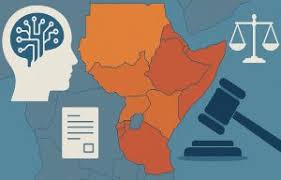
As the world is marvelled at emerging technologies ‘cleverness, East Africa stands at a defining moment. On one hand, it is among the most dynamic regions in the Global South, home to a vibrant entrepreneurial culture, growing tech hubs, and ambitious digital transformation strategies. On the other, it faces persistent political instability, governance fragility, and digital divide. So far, Regional Trade Agreements have been the main avenue for advancing trade related Artificial Intelligence cooperation among these economies.
The African Continental Free Trade Area and the East African Community’s faster uptake of digital integration, offers unprecedented opportunities to connect economies through AI, data driven logistics, and cross-border e-commerce. Yet, these ambitions confront sobering realities like the recurring crisis in Democratic Republic of Congo, civil conflict in Sudan, post-election unrest in Tanzania, and fragile digital governance frameworks that risk undermining trust and regional cooperation.
The Promise of an AI Driven Digital Trade Corridor
According to The World Trade Organisation, AI tools are already enhancing trade efficiency by improving visibility within supply chains, automating customs clearance, reducing language barriers, strengthening market intelligence, improving contract enforcement and helping firms, including micro, small and medium-sized enterprises, to navigate complex regulations.
The East African digital trade corridor is embedded with, the integration of data systems, and trade facilitation tools across borders, enabling the seamless flow of goods, services, and information. There are also new developments in some of the countries, that have already invested in AI powered systems for digital identification, customs modernization, and e-governance like Kenya’s National AI Strategy and Rwanda’s Center for the Fourth Industrial Revolution which exemplify the region’s growing ambition.
Even though, such innovations can transform trade efficiency, transparency, and inclusivity, this advancement and integration requires more than national progress but depends on trust, interoperability, and political stability across the region.
The Political Fault Lines
Recent unrest in Tanzania, fueled by post-election protests in October, 2025 led to internet shutdowns, curfews, and business disruptions where e-commerce platforms, logistics companies, and cross-border traders experienced severe losses. These numerous internet restrictions, often justified as security measures erode investor confidence and undermine digital sovereignty by discouraging innovation and data flow.
The devastating civil war in Sudan also exposes the fragility of East Africa’s digital integration project, collapse of telecommunications and digital infrastructure amid the ongoing conflict has paralyzed formal trade and humanitarian supply chains.
This disruption of basic communication networks clearly reveals how conflict can obliterate years of progress toward digitalization. Such crises highlight the fact that, digital systems can enhance resilience but their success depends on stable governance, shared data standards, and political will, all of which remain fragile in parts of East Africa.
The Role of AI in Integration and Resilience
The AfCFTA’s Protocol on Digital Trade, adopted in 2023, provides a regulatory foundation for harmonising digital markets with the goal of ensuring that digital transactions are recognised across jurisdictions, data flows are secure, and fintech solutions are interoperable. Effectively implemented, could transform fragmented national markets into a continent wide digital trade network.
Adoption of AI powerful tools, could support East Africa’s regional integration even in uncertain times for instance, intrade facilitation, machine learning can help customs agencies identify high risk cargo, automate documentation, and cut corruption through predictive analytics and optimizing border crossings along the Northern and Central Corridors.
Additionally, regional data observatories might easily monitor cross border data flows, detect cyber threats, ensure compliance with digital trade standards and incorporating Satellite imagery to support humanitarian logistics and infrastructure recovery in conflict contexts like Sudan.
However, these solutions require compatible systems, reliable data, and strong governance institutions. Without political trust, shared standards, and secure data frameworks, AI integration risks deepening inequalities rather than bridging them.
Governance, Trust, and Digital Sovereignty
The foundation of a digital trade corridor is data governance, regarding ownership, access and control of data generated by trade and digital services. East Africa’s countries differ widely in readiness, Kenya and Rwanda have relatively mature data protection laws, while others are still developing frameworks. Moreover, regional cooperation on data standards and AI ethics remains limited. The African Union’s Data Policy Framework (2022) and the EAC Digital Transformation Strategy (2023) provide direction, but national implementation is uneven.
The concept of digital sovereignty ensuring that countries maintain control over their digital assets while participating in open data ecosystems is particularly delicate. Therefore, Governments must avoid both extremes, excessive protectionism that stifles innovation, and unregulated openness that exposes economies to digital exploitation.
A moment of strategic choice
East Africa’s vision of a digital trade corridor powered by AI is not a fantasy, it is a necessary pathway to economic diversification, competitiveness, and inclusive growth. Yet the region’s political turbulence underscores a fundamental truth, technology cannot substitute governance.
AI may streamline trade, but only stable institutions, transparent data practices, and regional cooperation can sustain it. If the region can navigate its political fractures and invest in trustworthy AI and data systems, it could pioneer a model of digital regionalism that empowers the Global South, proving that even amid instability, intelligent integration is possible.
The joint World Bank-WTO Digital Trade for Africa project with its major aim of helping these countries fully harness the benefits of digitally enabled transactions and strengthen their development prospects will also play a complementary role in forging the path for innovative technologies across this region. East Africa’s next wave of AI driven trade ecosystems will be shaped by policy choices, governance frameworks, and power dynamics