
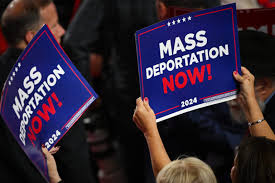
Recent reports indicate that the United States, under President Donald Trump’s administration, has pursued agreements with several African nations, including Uganda, to accept deportees from the U.S. who are not citizens of their home countries, often labeled as “third-country nationals.” According to international press, countries like Eswatini, South Sudan, El Salvador, Costa Rica, and Rwanda have already engaged in such deals, with Uganda recently confirming a temporary agreement to accept deportees under specific conditions, such as excluding those with criminal records or unaccompanied minors. This policy has sparked debate in Uganda, raising questions about the motivations behind the U.S. strategy, the moral implications of targeting resource-constrained nations, and how Uganda might leverage such agreements for its own benefit. This article examines these issues, critiquing the power dynamics at play and the transactional nature of the deals, which often prioritize political expediency over national interests.
The U.S. Motivation: Power and Convenience in a Global Hierarchy
The Trump administration’s decision to deport undocumented immigrants, including those deemed “uniquely barbaric” by U.S. officials, to poorer nations like Uganda reflects a broader political ideology rooted in exclusionary nationalism. The administration’s campaign promises centered on deporting illegal immigrants and gang members, often framing them as threats to American security and economic resources. Rather than addressing these challenges domestically—where the U.S. possesses vast resources and competent personnel—the administration has opted to offload these individuals to nations perceived as less powerful, reinforcing a global hierarchy where weaker states bear the burdens of the powerful.
This approach is not about the U.S. lacking capacity but about protecting its wealth and resources from what it views as an unwarranted intrusion by non-citizens, particularly from developing nations. The willingness of countries like Uganda, Rwanda, and Eswatini to accept these deportees perpetuates a troubling narrative: poorer nations are relegated to the role of global “dumping grounds” for those deemed undesirable by wealthier states. Such arrangements underscore a stark reality of international politics—where morality is often sidelined, and weaker nations are pressured to comply with the demands of dominant powers like the U.S.
Moral Concerns: Exploiting Vulnerability for Political Gain
From a moral perspective, the U.S. policy raises serious questions about fairness and human rights. Statements from U.S. officials, such as Tricia McLaughlin, Assistant Secretary in the Department of Homeland Security, describe some deportees as “so barbaric that their home countries refused to take them back.” Yet, instead of addressing the complex legal and humanitarian needs of these individuals, the U.S. has chosen to redirect them to nations like Uganda, which already host significant refugee populations—approximately 1.7 million, the largest in Africa. This decision exploits the economic and political vulnerabilities of resource-constrained countries, placing an undue burden on their already strained systems.
In Uganda, the acceptance of such deals highlights a transactional approach by political leaders, often driven by self-serving motives rather than patriotic or principled values. The lack of transparency in these agreements, which are negotiated by political operatives rather than professional negotiators, further erodes public trust. As opposition figures like Mathias Mpuuga have noted, the absence of parliamentary oversight renders these deals suspect, with many Ugandans questioning why their government would agree to host deportees while struggling to support their own citizens.
Leveraging the Agreement: Opportunities Amid Challenges
Despite these concerns, the old adage that “every dark cloud has a silver lining” prompts consideration of how Uganda might leverage its role in these agreements to its advantage, particularly given its exclusion from the African Growth and Opportunity Act (AGOA), high U.S. tariffs on Ugandan exports (15% on goods like coffee and cocoa), and tightened visa policies that limit Ugandans’ stays in the U.S. To turn this situation into an opportunity, Uganda must prioritize transparent, professionally negotiated agreements that secure tangible benefits for its citizens, rather than serving the personal or political interests of those in power.
Potential modalities for a “win” could include:
- Trade Concessions: Uganda could negotiate reduced tariffs or restored access to AGOA to boost exports like coffee, which faces competition from larger suppliers like Colombia.
- Economic and Infrastructural Support: Financial aid or investments in refugee integration programs could offset the costs of hosting deportees, addressing Uganda’s strained resources.
- Diplomatic Leverage: By demonstrating cooperation on migration and security, Uganda could strengthen its geopolitical standing, potentially easing U.S. sanctions imposed in 2024 over human rights concerns, such as those targeting parliamentary officials.
However, achieving these benefits requires overcoming significant hurdles. The secretive nature of the agreements, often negotiated directly by President Yoweri Museveni’s inner circle, undermines accountability. The reliance on political operatives rather than skilled negotiators results in outcomes that prioritize short-term political gains—such as bolstering Museveni’s image ahead of the 2026 elections—over long-term national interests. For Uganda to truly benefit, it must demand transparency, parliamentary oversight, and professional negotiation processes to ensure that any deal aligns with the needs of its people.
Conclusion: Reclaiming Agency in a Global System
The U.S. deportation agreements with Uganda and other African nations highlight a troubling dynamic in international relations, where powerful states exploit the vulnerabilities of poorer ones to advance their domestic agendas. For Uganda, accepting deportees risks reinforcing a narrative of inferiority and straining its already burdened citizenry. Yet, with strategic negotiation, Uganda could turn this challenge into an opportunity for economic and diplomatic gains. To do so, it must prioritize transparency, professional expertise, and national interests over the self-serving motives of political elites. Only then can Uganda navigate this complex arrangement without compromising its sovereignty or moral standing, ensuring that its role in global migration policies reflects dignity and agency rather than subservience to external pressures.