
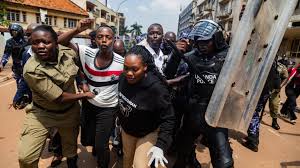
As Uganda draws closer to the 2026 elections which is a foundation of democratic legitimacy, their integrity is systematically undermined by a convergence of traditional and digital threats that have overtime skewed polls. Some practices such as vote buying have long distorted electoral competition, but in recent years these have been compounded by mass surveillance and recurrent internet blackouts that restrict civic space and silence dissent. Uganda is not an isolated case; across Sub-Saharan Africa, similar dynamics have emerged. In Kenya and Nigeria, concerns about disinformation and cyber manipulation have eroded public trust, while in Ethiopia, repeated internet shutdowns during moments of political contestation have stifled participation and obscured electoral accountability. Together, these trends highlight a continental pattern in which authoritarian techniques are adapted to both analog and digital arenas, deepening the vulnerability of fragile democracies.
Uganda thus serves as a critical case study of how the fusion of vote buying, surveillance, and connectivity disruptions creates a “triple threat” to free and fair elections. Addressing these risks requires more than ad hoc technical fixes; it demands robust institutional safeguards, greater transparency in digital governance, and coordinated regional and international responses that reinforce democratic norms. Without such interventions, elections risk becoming performative exercises rather than genuine expressions of the people’s will.
This article examines these dynamics through a comparative lens, reflecting on Uganda’s past two electoral cycles and situating them within broader debates on democracy, digital authoritarianism, and electoral integrity in Sub-Saharan Africa. The analysis focuses on three interlinked themes: surveillance and voter privacy risks; internet shutdowns and the silencing of the digital public square; and the persistence of vote buying as the monetization of elections to demonstrate how they converge to weaken the legitimacy of Uganda’s electoral process.
Surveillance and Voter Privacy Risks
Even before ballots are cast, Uganda’s elections are tested through surveillance. Biometric voter registration and digital ID systems, promoted as tools for transparency, have instead raised concerns about privacy, coercion, and the potential misuse of personal data by state actors. Reports by Unwanted Witness highlight how facial recognition, SIM registration, and social media monitoring entrench state surveillance into electoral processes.
While technologies are introduced under the guise of efficiency and fraud prevention, they also create avenues for surveillance, data misuse, and intimidation.The risks are tangible. In 2021, biometric verification failures frustrated voters and fueled suspicion. In a fragile democratic environment, the line between securing the vote and monitoring voters is easily blurred, undermining trust in both the Electoral Commission and the broader democratic process.There has been serious data breaches whereby the state actors have intercepted and tapped into phone conversations of citizens and trailed them into their homes for abductions due to their political affiliations and utterances, such recurrent scenarios have from the previous elections have instilled fear and led to a low voter turn out and non participatory in the electoral process.
Internet Shutdowns and Silencing the Digital Public Square
While surveillance compromises citizens’ privacy before elections, internet shutdowns magnify the problem during campaigns and voting days. By cutting off access to communication and information, the state effectively silences the digital public square, limiting citizens’ ability to organize, verify results, and participate meaningfully in democratic processes.
Uganda’s experience is symbolic as I take you back to times in 2016, authorities ordered social media blackouts on platforms like Twitter and Facebook which remained cut off to date , citing “national security,” which civil society organizations denounced as unconstitutional. By 2021, the measures escalated into a near-total internet shutdown that lasted five days, crippling not only political communication but also the economy, with estimated losses of over $109.7m as the total cost due to internet restrictions.
Reports by the UN Human Rights Council (2022) and Access Now’s #KeepItOn coalition highlights Uganda among repeat offenders that weaponize connectivity restrictions to control political narratives and suppress dissent. Such actions directly contravene Article 19 of the International Covenant on Civil and Political Rights (ICCPR), which Uganda is party to, guaranteeing the right to freedom of expression and access to information.
By disrupting communication channels at the most decisive moments of the electoral cycle, shutdowns erode transparency, weaken citizen oversight, and breed mistrust in electoral outcomes. As the African Commission on Human and Peoples’ Rights (ACHPR, 2019) has underscored, shutdowns are never compatible with democracy and should be considered a form of collective punishment against citizens.
Uganda’s repeated resort to these tactics places it in a troubling global pattern where governments instrumentalize internet blackouts to shrink civic space. Left unchecked, this undermines not only electoral legitimacy but also citizens’ trust in digital governance and democratic institutions in the long term.
Vote Buying and the Monetization of Elections
Digital repression is only part of Uganda’s electoral challenge. Alongside surveillance and shutdowns, vote buying remains one of the most entrenched practices shaping electoral outcomes. Cash handouts, household goods, and even food parcels are routinely distributed during campaigns, reinforcing patronage networks that undermine free choice at the ballot box.
The Afrobarometer survey (2021) found that over one-third of Ugandans reported being offered food, gifts, or money in exchange for their votes, a striking indicator of how normalized this practice has become. The Uganda Governance Monitoring Project has likewise documented widespread monetization of politics, noting that parties and candidates view such inducements as necessary tools of mobilization, especially in rural constituencies.
Observers, including Freedom House and the European Union Election Observation Mission (EOM), have consistently flagged vote buying as a critical distortion of electoral integrity. While the EU did not deploy a formal observer mission in 2021 citing accreditation challenges the European Parliament condemned the electoral process as neither democratic nor transparent, drawing attention to the misuse of public resources and a compromised electoral environment.
This commodification of political participation not only cheapens the value of the vote but also entrenches corruption as part of the electoral bargain. In a context where digital repression already curtails free expression and transparency, the persistence of vote buying ensures that elections remain less a contest of ideas than a transactional marketplace. Together, these practices reinforce incumbency advantage and hollow out democratic competition, leaving citizens with little faith in the ballot as a vehicle for real change.
Conclusion
Recent amendments to Uganda’s electoral laws, particularly the Electoral Commission (Amendment) Act 2020, introduced provisions for using technology in voter registration, tallying, and results transmission. While these reforms suggest a step toward modernization, they also expose the electoral process to heightened risks of surveillance, data misuse, and opaque system failures. When combined with internet shutdowns that silence transparency and vote buying that corrodes accountability, the adoption of poorly regulated digital systems risks deepening mistrust in Uganda’s elections rather than strengthening them.
To safeguard democracy, electoral technologies must align with international standards on privacy and fairness, while ensuring clear oversight, independent audits, and accessible mechanisms for complaints and appeals. Without this, Uganda’s elections will continue to be vulnerable to the triple threat of surveillance, blackouts, and vote buying.
As Uganda heads toward the 2026 general elections, I suggest there is need for more specific and directed voter education against vote buying, as well as stronger implementation of laws on anti-bribery laws to protect the integrity of the vote.